How do you know if you need a pet bereavement counsellor?
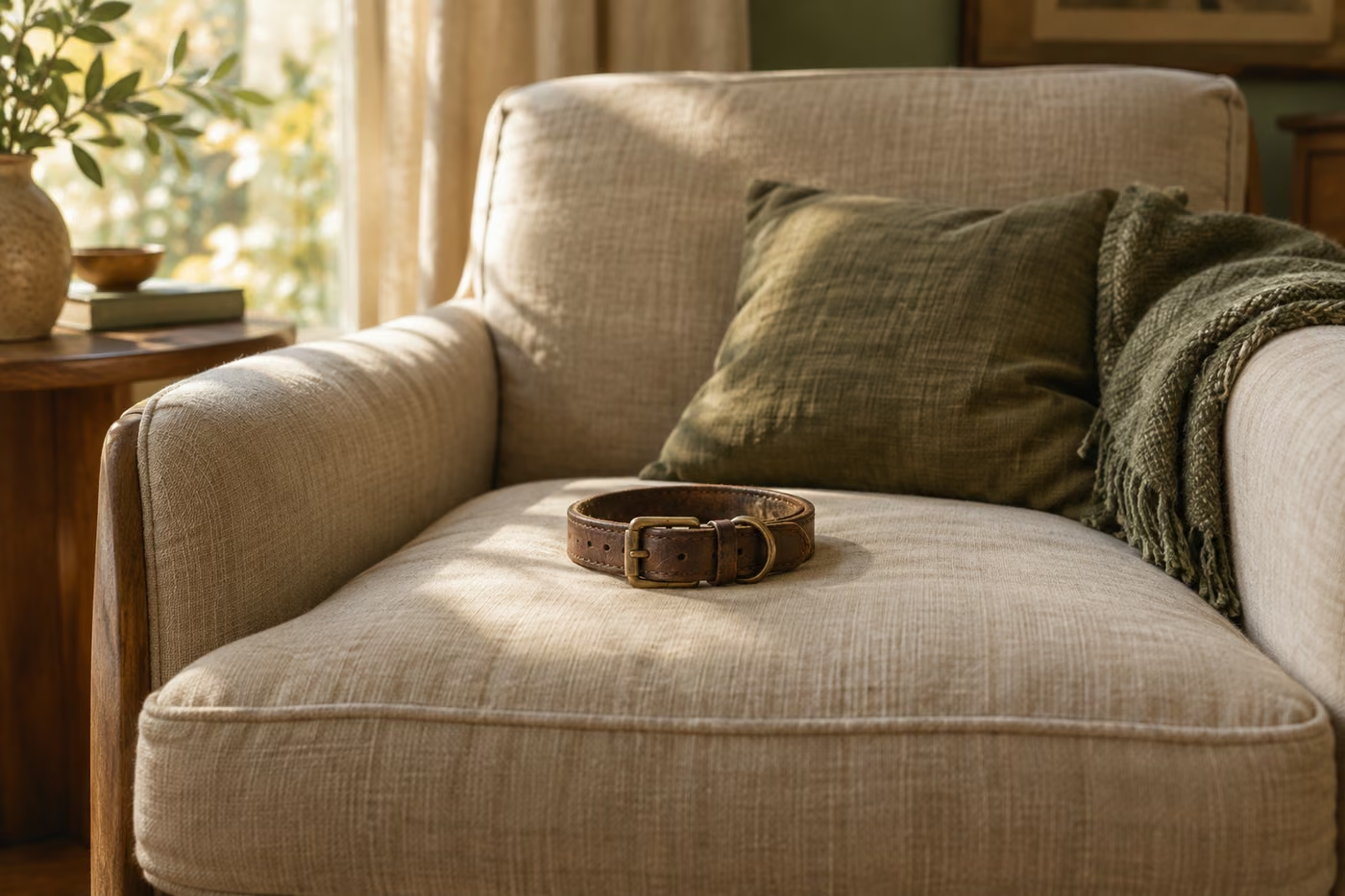
If you are reading this, perhaps some part of you has been quietly wondering whether you need a pet bereavement counsellor. Maybe the grief feels bigger than you expected. Maybe you are not sure it is "serious enough" to speak to anyone about. Both of those feelings are far more common than you might think.
Losing a beloved companion is a real loss, and the wondering itself makes sense. It is often how the moment before reaching out feels: a quiet sense that this is more than one heart can comfortably hold.
Why a pet bereavement counsellor can help
Grief for a pet often has nowhere to go. There is rarely a funeral, rarely time off work, rarely the kind of gathering where people share stories and hold each other up. So the love and the loss stay inside, unspoken.
Counselling offers a space where this loss is taken seriously from the very first word. A space where there is no need to explain why it matters, or to apologise for the tears. A space where your companion can be spoken about by name, for as long as you need, with someone who understands that they were family.
I hold a Bachelor's Degree in Psychology and an Advanced Diploma in Pet Bereavement Counselling, and this is the grief I have chosen to sit alongside. That training matters. But often what matters most is simply being heard by someone who does not flinch at the size of what you feel.
When the people around you don't quite understand
Friends and family usually mean well. Yet after the first few days, the world can seem to move on far faster than you can. The questions stop. Someone mentions getting another pet. Someone says, kindly enough, that it was only a cat.
That gap between what you feel and what others seem to see can be one of the loneliest parts of pet loss. If you have been asking yourself why losing a pet hurts so much, the answer lies in the depth of the bond, not in any overreaction on your part. Your feelings are not wrong. They may simply not have found the right listener yet.
When the grief feels too heavy to hold alone
Sometimes it is not about what others think at all. It is simply the weight. The mornings that begin with remembering. The ache that sits in your chest through the day. The sense of carrying something enormous that nobody else can see.
Some people describe feeling unlike themselves: tired, flat, unable to concentrate, or startled by how deeply they have been shaken. None of that means you are failing at grief. It is what love feels like when it suddenly has nowhere to go, and it is a great deal to carry by yourself.
When guilt and "what ifs" keep circling
Guilt is one of the most common companions of pet loss, and one of the least spoken about. Was it too soon. Was it too late. Should I have noticed sooner. These questions can turn over and over, especially at night, with no one to say them out loud to.
Guilt like this is so often love looking for somewhere to land. It deserves gentleness rather than judgement, and it can feel very different once it is spoken aloud to someone who understands.
When time has passed and it still feels raw
There is no correct length of time to grieve a companion. Still, many people quietly worry when weeks or months go by and the loss feels as sharp as ever, or when a small reminder brings it all flooding back.
This is not you going backwards, and nothing is wrong with you. Grief keeps no timetable. But the feeling of being stuck in the same raw place, or of holding it all together for everyone else, is a lonely one, and it deserves to be heard.
Is my grief serious enough for a counsellor?
This may be the question that holds the most people back. It was only a dog. Other people have it worse. I should be over this by now.
Those thoughts are so common, and they are worth recognising for what they are: the world's discomfort with pet grief, echoing in your own mind. There is no level of sadness you need to reach before support is meant for you. If the loss of your companion has changed how your days feel, that is reason enough for it to matter.
And sometimes the loss has not even happened yet. When a companion is old or unwell, the long ache of anticipatory grief can be just as heavy, and it is every bit as real.
Questions people often ask
Is it normal to want counselling after losing a pet? Yes. A pet is often one of the most constant presences in a person's life, and losing them can bring grief as deep as any other. Wanting a space to talk about that loss is a natural response to a real bond, not a sign of weakness.
Is pet bereavement counselling only for people in crisis? No. Counselling is a space for grief of every size, including the quiet, steady ache that carries on underneath an ordinary-looking day.
Can pet bereavement counselling happen online? Yes. All of my sessions are online, so support can reach you wherever you are, including South Africa and the UK, from a place that already feels safe.
You loved them, and the grief is the measure of it. Wondering whether you need support is not a weakness. It is your heart recognising how much this matters.
If any of this feels familiar, I would be honoured to sit alongside you. I am Elisabeth, and I offer gentle, online pet bereavement counselling wherever you are. You don't have to carry this alone. When you feel ready, I am here.
← Back to all reflections